Industrial Strength: Building a Manufacturer's Website That Works
A manufacturer's website is rarely just a brochure. For many buyers, it is the first place they check when they need to evaluate a supplier, compare capabilities, or verify a company's credentials. A site that looks outdated or fails to answer basic questions can send potential customers straight to a competitor. Yet the approach to building a site for a manufacturing business is different from what works for a retailer or a service provider. The priorities are different, the audience is different, and the goals are often more specific.
What Makes Manufacturing Websites Different
Manufacturers sell to other businesses, not to the general public. Their customers are engineers, procurement managers, quality assurance teams, and project planners. These visitors come to a site with a job to do. They want to know if a company can produce a part to a certain tolerance, whether it holds certifications, what its lead times are, and how to get a quote. Fluff gets in the way. A manufacturing website should reduce friction, not add it.
Another difference is the range of content a manufacturer needs to present. A single factory might serve multiple industries, each with its own technical language and requirements. The site must speak clearly to each audience without becoming a maze of pages. At the same time, product lines can be complex, with dozens of specifications, options, and variants. Organising that information so that a visitor can find what they need quickly is a design challenge in itself.
Clear Site Architecture Is the Foundation
Before any visual design work begins, the structure of the site needs to be mapped out. A manufacturer's site typically needs sections for products or services, technical resources, quality certifications, case studies, and contact or quote requests. Each section should be easy to reach from the main navigation, and the path from the homepage to a specific product page should be short.
One common mistake is burying key information under too many clicks. If a visitor has to navigate through three or four pages just to find a data sheet, they are likely to leave. A flat site structure, where most pages are within two clicks of the homepage, works better. Breadcrumb navigation also helps users keep track of where they are, especially on sites with many subcategories.
Design That Builds Trust
The visual design of a manufacturing website should communicate competence and reliability. That does not mean it has to look plain or industrial. But it should avoid elements that feel gimmicky or that slow the page down, such as large video backgrounds or complex animations. Clean typography, a restrained colour palette, and high-quality images of the factory, equipment, and finished products all help build credibility.

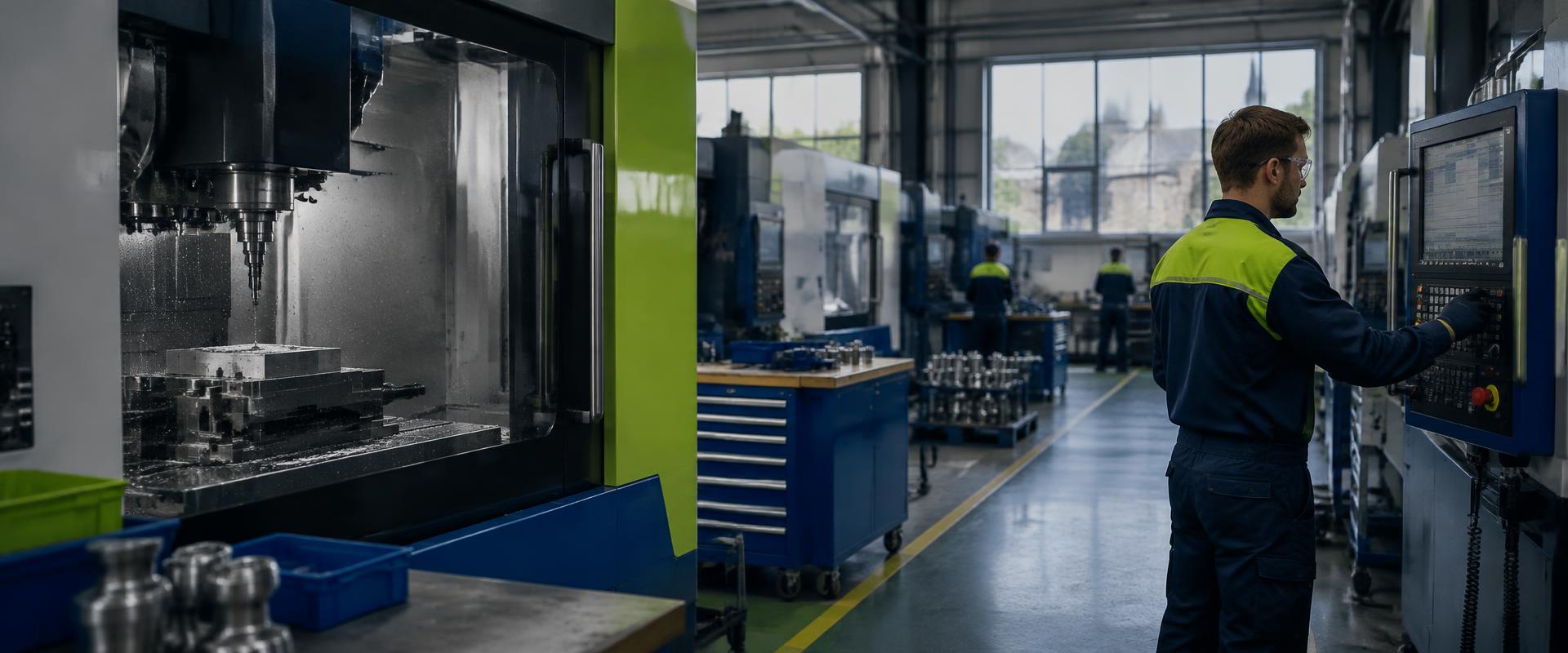
Photographs are especially important. A picture of a clean, well-organised production floor says more than a paragraph of text. Images of finished parts or assembled products show the quality of the work. If possible, include photos of the team, not just the machinery. Buyers want to know they are dealing with real people.
Another trust signal is transparency about capabilities. List the types of materials you work with, the size range of parts you can produce, the tolerances you hold, and any special processes you offer. The more specific you can be, the easier it is for a potential customer to decide whether you can handle their project. Vague claims like "we handle a wide range of materials" are less helpful than "we machine stainless steel, aluminium, brass, and engineering plastics up to 600 mm in diameter."
Content That Answers Real Questions
Every page on a manufacturing site should answer the questions a buyer would ask at that stage of their research. A product page, for example, should include a clear description, key specifications, available options, and typical applications. It should also explain how to order, what information you need to provide a quote, and what the typical lead time is.
Technical resources, such as CAD files, data sheets, or material guides, are valuable additions. They show that a manufacturer is prepared to work with a customer's engineering team. They also improve the site's usefulness, which encourages repeat visits and referrals.
Case studies are another powerful tool. A well-written case study describes a problem a customer had, how the manufacturer solved it, and what the outcome was. It provides social proof and gives a prospect a concrete example of what working with you would be like. When writing case studies, focus on the customer's goals and the results, not on your own process.
Buzz Media Marketing ltd is also on Instagram.
One area where many manufacturers fall short is the "About" page. It often becomes a dry timeline or a list of equipment. Instead, use that page to tell the story of the company, explain its values, and introduce key people. Buyers make decisions based on trust, and a good About page can build that trust faster than any product page.
Technical Performance Matters
Manufacturing buyers are often researching on company time, but they are still impatient. A slow-loading page can cost you a lead. Optimise images, use a reliable hosting service, and keep the site's code clean. Mobile responsiveness is also non-negotiable. Many procurement professionals check sites on tablets or phones while they are on the factory floor or in meetings.
Search engine optimisation for a manufacturing site is different from SEO for a retail site. The keywords tend to be longer and more specific, such as "CNC machining of aluminium parts for aerospace" rather than "machining services." Each product or service page should target a specific set of terms that a buyer would actually type into a search engine. Writing clear, descriptive page titles and meta descriptions helps, as does including technical terms that your audience uses.
Good web design for manufacturers incorporates these SEO considerations from the start, rather than adding them as an afterthought. The structure of the site, the content on each page, and the technical setup all work together to help the right people find the site and take action once they are there.
Practical Steps to Get Started
If you are planning a new website or a redesign, begin by listing the questions your customers ask most often. Then design the site to answer those questions on the first page a visitor lands on. Group related information together and make sure the navigation labels are clear and descriptive. Avoid internal jargon that a new customer would not understand.
Next, audit your existing content. If you have PDFs of data sheets or brochures, consider turning the key information into web pages. PDFs are hard to search and slow to load. A page with the same information, formatted for the web, is more useful and more likely to rank well in search results.
Finally, set up a way to track how visitors use the site. Simple analytics can show you which pages are most popular, where people drop off, and what search terms they use to find you. Use that data to refine the site over time.

Balancing Depth with Clarity
A manufacturing website has to serve two audiences at once: the technical expert who needs detailed specifications, and the decision-maker who wants a quick overview. The solution is to layer information. Start each page with a short summary of what the product or service does and who it is for. Then provide expandable sections or tabs with the full technical details. That way, each visitor can choose the level of depth they need.
This approach also helps with search rankings. The summary at the top of the page contains the most important keywords, while the detailed sections provide the depth that search engines reward. It is a practical example of how thoughtful design can serve both users and algorithms.
Buzz Media Marketing ltd, based at Unit 228, Northlight Industries, Pendle Rd, Brierfield, Nelson BB9 5FL, UK, can be reached at +44 1282 501535 for affordable web design, development, hosting and ongoing website care for businesses in Burnley and surrounding Lancashire areas.